A useful rainwater system starts with a defined demand: perhaps garden irrigation during suitable periods, or toilet flushing where approved. Those jobs need different delivery arrangements. Write down the intended use before shopping for tanks, pumps or filters. Unless a competent assessment establishes otherwise, treat collected roof water as non-potable and keep it separate from drinking-water plumbing.
Check the site before estimating yield
Inspect the contributing roof, gutters and nearby surroundings. Roof coatings, lead-containing materials, accumulated bird droppings, smoke fallout and overhanging branches can affect suitability. A clean-looking roof is not proof of clean water. Ask the relevant local authority about collection restrictions, permitted end uses, building setbacks and plumbing approval. Check utility requirements if any mains top-up is proposed.
Identify where heavy rainfall currently goes. A tank cannot intercept every storm, and a full tank provides no additional storage until water is used. Its overflow must discharge through an approved route without undermining foundations, flooding neighbors or creating stagnant pools. Include safe access for inspection and cleaning; do not squeeze equipment into a space that makes routine maintenance impractical.
Map the complete non-potable pathway
- 01 / CollectSuitable roof and maintained gutters.
- 02 / ScreenDebris exclusion and suitable diversion.
- 03 / StoreCovered, supported, screened tank.
- 04 / DeliverApproved non-potable outlets and separation.
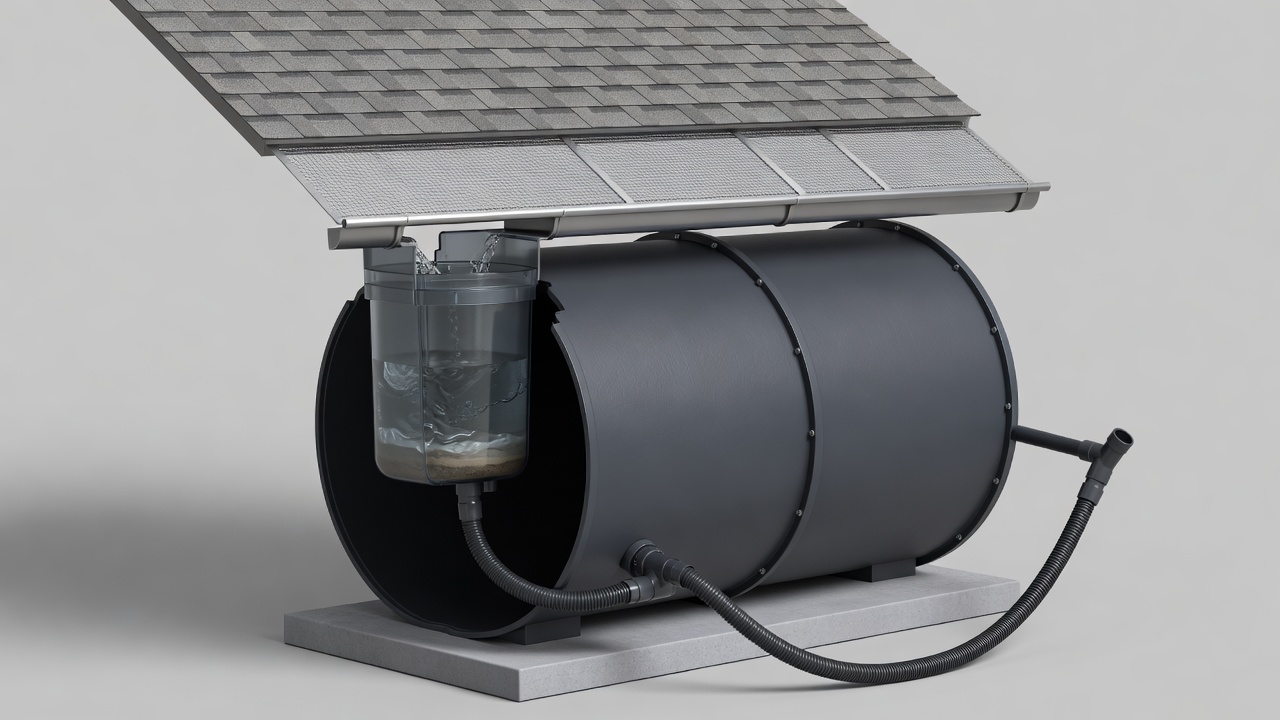
This flow is conceptual, not an installation drawing. Screens intercept larger debris. A first-flush device diverts some initial runoff that may carry accumulated contamination, but its performance depends on design, rainfall and maintenance. Neither device disinfects water. Diversion volume and drainage arrangements need site-specific consideration rather than a universal rule of thumb.
Size for timing, not just annual totals
One millimeter of rain falling on one square meter represents one liter before losses. For example, 20 millimeters across 80 square meters gives 1,600 liters of gross rainfall volume. Actual collection is lower because of diversion, wetting losses, leakage and overflow. This calculation estimates supply; it does not establish water quality or determine a tank size.
Compare local rainfall records with the demand expected between rain events. A large annual rainfall total can hide a long dry season. Model storage over shorter intervals, subtracting demand and allowing overflow when the tank fills. Start with conservative assumptions. Ask whether the selected storage would actually be emptied often enough to capture subsequent rain, and what happens when supply runs out.
Choose storage as a maintained asset
Use a tank suitable for the intended water use and exposure conditions, supported according to its manufacturer's requirements. Stored water is heavy: a full tank's load includes the water, vessel and fittings. Foundation preparation, anchoring, underground loading and access are professional design matters. Keep lids secure and screen openings appropriately against insects and debris without obstructing required ventilation or overflow.
Plan a visible, accessible inspection point and an approved route for draining or cleaning. Do not enter a tank yourself: tanks can be confined spaces with serious hazards. If a pump is needed, consider noise, electrical protection, dry-run protection and service access. Mains backup must not create a direct cross-connection; obtain an approved arrangement from a qualified plumber.
Keep a practical maintenance record
| Component | What to check | When to review |
|---|---|---|
| Roof and gutters | Debris, contamination, blocked outlets | Seasonally and after significant storms |
| Screens and diversion | Clogging, damage, reset or drainage function | At manufacturer intervals and after debris events |
| Tank and overflow | Secure lid, intact screening, leaks, safe discharge | Regular inspection and after heavy rain |
| Pump and protection | Leaks, unusual cycling, required protection testing | According to equipment and local requirements |
These are planning prompts, not a universal service schedule. Local conditions can demand more frequent checks. Record each inspection, problem and repair so gradual changes are visible. Stop using affected outlets if contamination, misconnection or equipment failure is suspected, and seek qualified advice before restarting.
Useful starting points
- US EPA: Soak Up the Rain — runoff context, not a household plumbing approval.
- Australian Bureau of Meteorology: climate data — an example of an official rainfall-data source.
- CDC: collecting rainwater — health risks and drinking-water cautions.